


Between 3 and 6 months, your baby's sleep patterns begin to change, making this a good time to introduce a simple bedtime routine.
A consistent bedtime routine for a 3-6 month old baby can help signal that nighttime sleep is coming and make the transition from playtime to bedtime calmer. It does not need to be complicated or follow a strict schedule.
In this guide, you'll learn what a bedtime routine can look like, how to choose the right bedtime, how it may change as your baby grows, and the safe sleep rules to keep in mind.
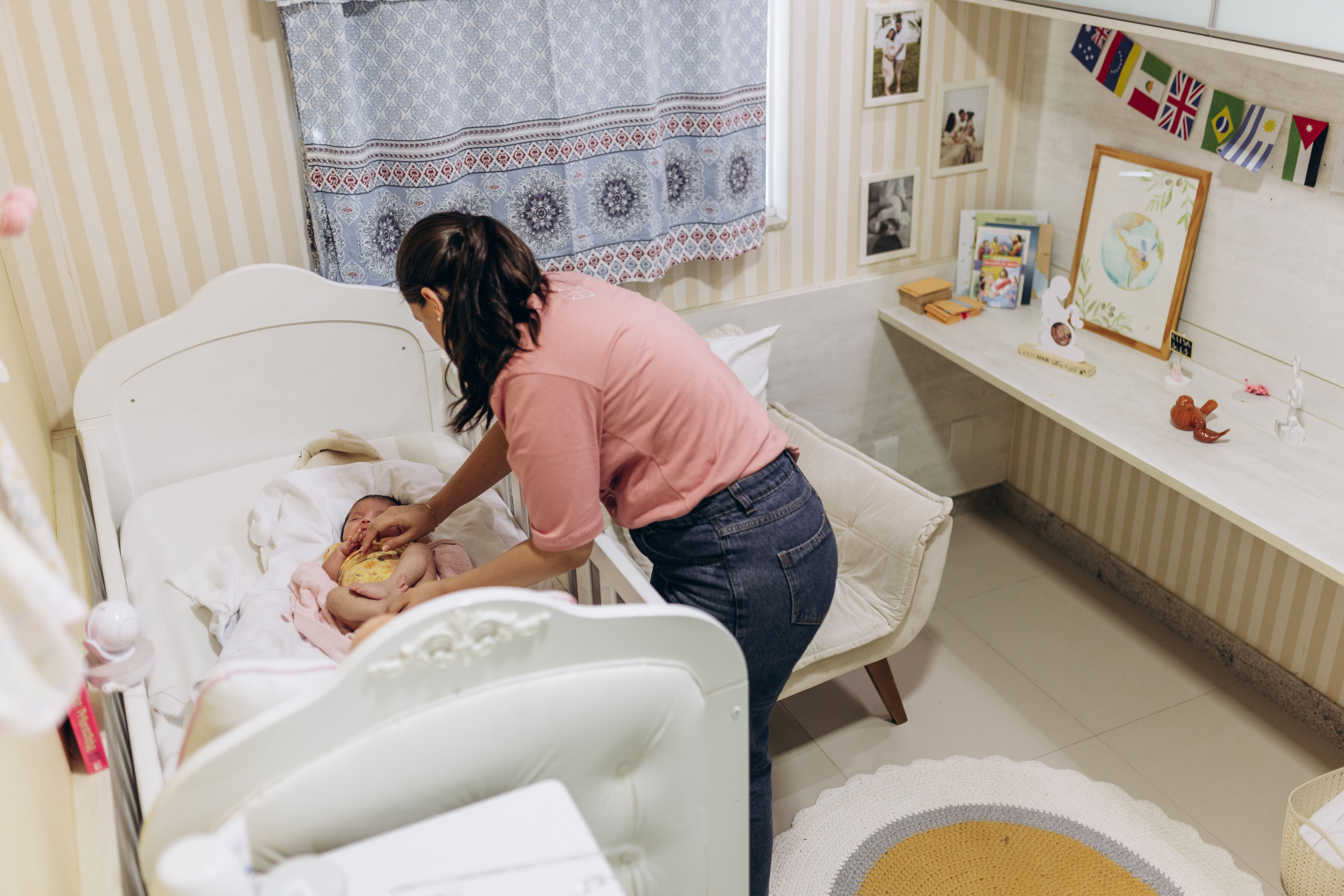
What Should a Bedtime Routine Look Like at 3-6 Months?
A bedtime routine for a baby this age can be surprisingly simple. Aim for a sequence that you can comfortably repeat most evenings rather than a long routine that becomes stressful to maintain.
For many families, around 20 to 30 minutes is enough.
A simple routine might look like this:
-
Lower the stimulation. Dim the lights, reduce household noise, and move away from energetic play.
-
Feed your baby if it fits their normal feeding pattern. Keep the environment calm rather than turning the feed into playtime.
-
Change the diaper and put on pajamas or a sleep sack.
-
Spend a few quiet minutes together. You might read a short book, sing the same song, cuddle, or speak softly.
-
Place your baby in their safe sleep space.
For babies around 4 months and older, the AAP suggests putting babies down when they are drowsy rather than waiting until they are completely asleep. This may gradually help them become familiar with falling asleep in their own sleep space.
However, this does not mean a 3- or 4-month-old must fall asleep independently every night. Babies develop at different rates, and younger babies may still need significant help settling.
The goal is not to eliminate comfort. The goal is to create recognizable bedtime signals.
How to Choose the Right Bedtime
There is no single perfect bedtime that works for every 3- to 6-month-old baby.
Instead of choosing a bedtime because another family puts their baby down at 7:00 p.m., look at your own baby's 24-hour pattern.
Start by observing:
-
When does your baby usually wake in the morning?
-
When does the final nap usually end?
-
When does your baby naturally begin showing signs of tiredness?
-
At what time does your baby usually begin their longest stretch of nighttime sleep?
-
Is your baby calm at bedtime or already exhausted and crying?
For example, if your baby regularly begins their longest sleep around 8:30 p.m., you could start the bedtime routine around 8:00 p.m. Over several days, see whether that timing leads to a relatively calm bedtime.
You do not need to hit the exact same minute every night. A consistent bedtime window is usually more realistic during this stage because naps and feeds can still vary.
Watch your baby's behavior as well. Common tired signals may include becoming quieter, staring away, rubbing the face, fussing, or losing interest in play.
If your baby consistently becomes extremely upset during the routine, bedtime may be happening too late. If your baby is cheerful and ready to play for a long time after being placed in bed, the timing may be too early.
Think of bedtime as something you adjust based on patterns rather than a fixed number you must achieve.

Look at your own baby's 24-hour pattern to choose the right bedtime
How the Routine Changes From 3 to 6 Months
A bedtime routine does not have to stay exactly the same as your baby develops.
Around 3 months
Sleep is often still unpredictable. Feeding and soothing may take up a larger part of bedtime, and your baby may need rocking, holding, or other support to fall asleep.
At this stage, focus primarily on introducing familiar signals such as dim lights, pajamas, a song, and the same sleep environment.
Around 4 months
Sleep patterns begin becoming more organized around this age. The AAP notes that regular sleep cycles generally begin developing at about 4 months.
Some parents also notice more frequent waking during this transition. Rather than abandoning the routine, keep the sequence familiar while allowing extra comfort when needed.
This can also be a good time to experiment with placing your baby down drowsy but awake if they tolerate it.
Around 5 months
Your baby's daily rhythm may become easier to recognize. You may begin seeing more predictable naps, feeds, and periods of alertness.
The bedtime routine can become slightly more structured, perhaps following the same 20- to 30-minute sequence each evening.
Around 6 months
Many babies have clearer distinctions between daytime and nighttime by this point, although waking during the night can still be completely normal. The AAP specifically notes that a 6-month-old may wake during the night and sometimes return to sleep after a few minutes.
Night feeds may still be appropriate for some babies, so do not remove them simply because your baby reaches a particular age. If you are unsure whether your baby still needs nighttime feeding, discuss their feeding and growth with your pediatrician.
When the Bedtime Routine Isn't Working
Even a carefully planned routine will not make every bedtime easy.
If your baby suddenly starts resisting sleep, waking more often, or crying during the routine, first look for what may have changed.
Check the timing. If your baby is exhausted before the routine begins, try starting slightly earlier. If they seem wide awake at bedtime, consider shifting it later.
Look at the final nap. An unusually late or long nap can temporarily change when your baby is ready for nighttime sleep.
Keep the routine simple. Baths, toys, bright lights, multiple books, and lots of interaction can sometimes make bedtime more stimulating rather than more relaxing.
Consider hunger. Babies grow rapidly during these months, and feeding patterns can change. Do not try to force a sleep schedule by delaying an appropriate feed.
Expect developmental changes. A routine that worked beautifully last month may temporarily stop working as your baby's sleep patterns and abilities change.
Avoid changing everything after one difficult night. Instead, observe several days and look for a pattern before adjusting the routine.
If persistent sleep difficulties occur alongside concerns about breathing, feeding, growth, reflux, illness, or your baby's overall health, talk with your pediatrician rather than relying solely on schedule changes.

Do not try to force a sleep schedule by delaying an appropriate feed
Safe Sleep Rules to Keep in the Routine
Whatever bedtime routine you choose, safe sleep should always be the final step.
The AAP and CDC recommend placing babies on their backs for every sleep on a firm, flat, non-inclined sleep surface designed for infants, such as an appropriate crib, bassinet, portable crib, or play yard.
Keep the sleep space clear. That means no pillows, loose blankets, stuffed animals, crib bumpers, comforters, or other soft objects around your baby. A properly fitted sheet should be all that is needed on the mattress.
The AAP recommends room-sharing without bed-sharing for at least the first 6 months. Your baby's crib or bassinet can be close to your bed, but your baby should have a separate sleep surface.
If you use a swaddle, pay particular attention during this age range. Babies may begin attempting to roll around 3 to 4 months or even earlier. The AAP advises stopping swaddling as soon as your baby shows signs of trying to roll. Weighted swaddles and other weighted sleep products should not be used.
Once a baby can comfortably roll from back to stomach and stomach to back independently, parents should still initially place the baby on their back. If the baby then rolls independently during sleep, the AAP says you do not need to repeatedly turn them back, provided the sleep area remains free of soft bedding and other hazards.
Safe sleep matters more than achieving a perfect routine.
FAQs
What is a good bedtime routine for a 3-month-old?
Keep it short and calming. Dim the lights, feed your baby as appropriate, change their diaper, put on sleep clothing, cuddle or sing quietly, and place them in their safe sleep space. At 3 months, it is normal if your baby still needs significant help falling asleep.
How long should a bedtime routine be for a 3-6 month old baby?
Around 20 to 30 minutes can be a practical starting point, but there is no requirement to reach a specific length. Consistency and calmness matter more than creating a long routine.
What time should a 3-6 month old go to bed?
There is no universal bedtime for this age. Use your baby's morning wake time, naps, feeds, sleepy cues, and natural nighttime sleep pattern to identify a bedtime window that works consistently.
Should I feed my baby right before bed?
You can include a feed in the bedtime routine if it fits your baby's feeding needs. Young babies may still require frequent feeds, including during the night. If you have questions about reducing nighttime feeds, discuss them with your pediatrician.
Is it normal for a 6-month-old to still wake at night?
Yes. Night waking does not automatically mean something is wrong with your routine. The AAP notes that it is normal for a 6-month-old to wake during the night, and some babies will settle back to sleep after a short period.
Conclusion
Creating a bedtime routine for a 3-6 month old baby is less about following a strict clock and more about building predictable, calming signals that your baby can gradually associate with nighttime sleep.
Start with a short routine you can repeat consistently. Watch your baby's sleep patterns and tired cues, adjust bedtime as their naps and development change, and remember that temporary sleep disruptions are common during these months.
Most importantly, end every bedtime routine with a safe sleep environment: baby on their back, on a firm and flat surface, with no loose bedding or soft objects.
Your baby's sleep will continue evolving well beyond the 3- to 6-month stage. A simple and flexible routine gives you a foundation that can evolve with them.


